
Abstract
Engineering a novel N2-fixing rhizobia symbiosis in cereal crops is a strategy being pursued to improve agricultural sustainability. However, if such a symbiosis were introduced, it would have to be economically viable in the context of plants’ existing nutrient acquisition strategies, including existing symbioses with arbuscular mycorrhizal fungi (AMF) that most plants already engage in. It is important to understand how the metabolic costs and benefits from these symbioses with overlapping functions might impact plant growth when evaluating the potential benefits of this engineering strategy. To address this, we developed metabolic models describing how the relative growth rate of Zea mays is impacted by the AMF Rhizophagus irregularis and a hypothetical N2-fixing symbiosis with Bradyrhizobium diazoefficiens in isolation and in tandem. The metabolic models of the plant-AMF symbiosis and plant-AMF-rhizobia symbiosis are the first of their kind. To validate the AMF component of our model, we conducted a field evaluation comparing AMF-compatible and mutant AMF-incompatible maize hybrids. The empirically measured AMF-mediated growth benefit agreed well with model predictions. Our model of the rhizobium symbiosis predicted that the lower N content of cereal crops makes the growth penalty associated with acquiring nitrogen from rhizobia smaller than in legumes. Finally, the model of the plant-AMF-rhizobia symbiosis predicted positive synergies between rhizobia and AMF under nutrient-limited conditions but negative synergies under phosphorus-replete conditions. This indicates that these bioengineering strategies could improve cereal crop yields and may achieve greater gains in tandem, but soil nutrient levels and plant nitrogen requirements should be considered.
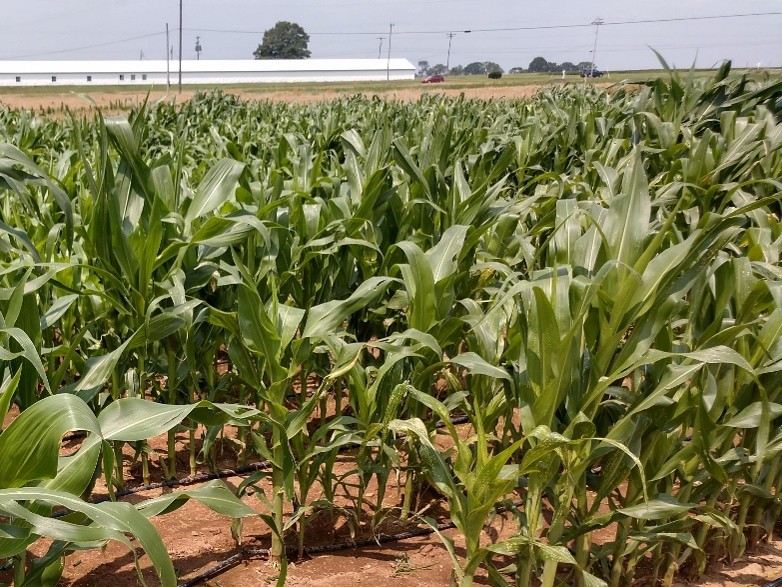
Image: Maize grown by ENSA group leader Ruaridh Sawers at Penn State University helped to experimentally validate the model of maize and AM fungi.
Read full article